























How to Find a Stud Without a Stud Finder
Finding a stud in your walls is crucial for safely hanging shelves, pictures, and even heavy items. In my experience, there are several methods I can use to detect these hidden supports without a stud finder. Let’s dive into these techniques together!
Using a Knock Test
The first and simplest method I can try is the knock test. By gently knocking on the wall with my knuckles, I listen for a change in sound. A hollow sound suggests no stud behind it, while a solid sound indicates a stud.
- Start at one end of the wall.
- Knock lightly and listen carefully.
- Move horizontally until I detect a solid sound.
Confirming the Location
Once I hear a solid sound, I can confirm the stud’s position:
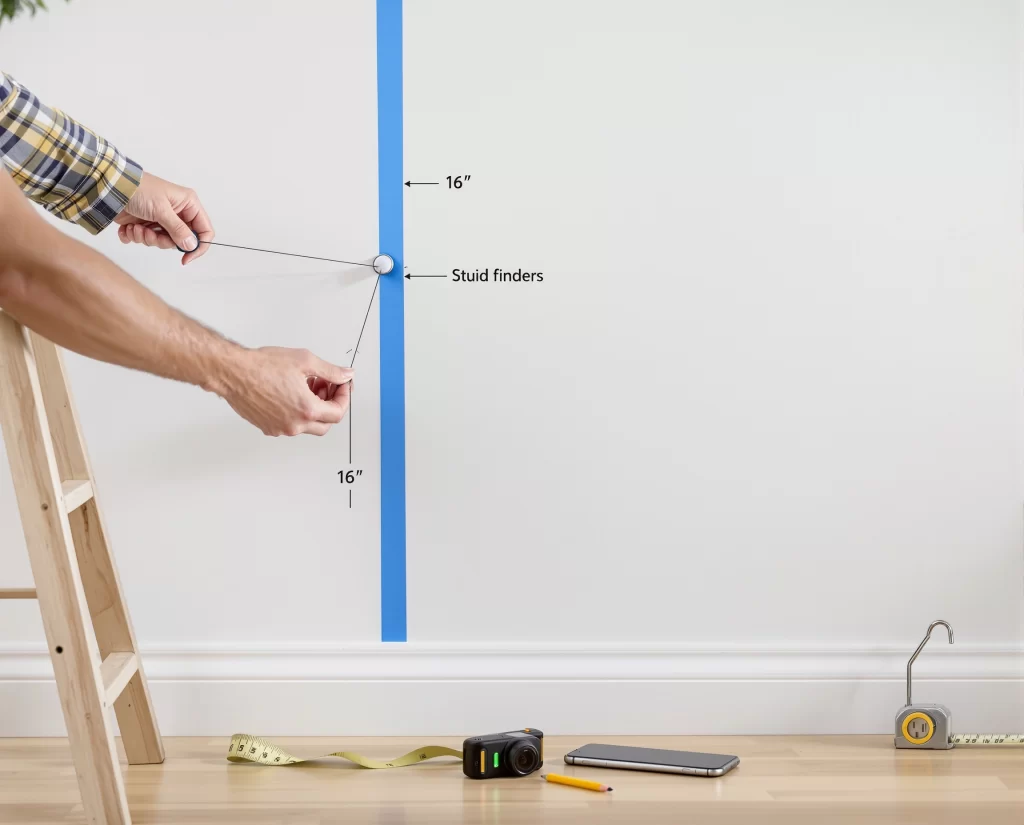
- Measure 16 inches from the identified position (common stud spacing).
- Knock again to ensure I still hear that solid sound at this new spot.
Using a Magnet
Another effective method involves using a small magnet. I can move the magnet along the wall until it sticks to screws or nails that are attached to the stud.
- A strong magnet will attract screws or nails.
- I can use this to map out where the studs are located.
Benefits of the Magnet Method
This approach is non-invasive and doesn’t require any tools. Not only does it help me locate the stud, but it also reveals any previous hangings.
Visual Inspection
If I can’t hear or find any metal, I might look for visual clues on the wall itself.
- Check for dimples or slight imperfections in the paint.
- Look for electrical outlets and switch plates; studs are often found nearby.
Marking the Studs
Once I spot potential stud locations, I can use a pencil to make small marks on the wall before verifying them through knocking or a magnet.
Measuring from a Corner
Another technique I can employ is measuring from the nearest corner of the room. Most studs are spaced about 16 to 24 inches apart from each other.
- Measure in increments of 16 or 24 inches from the corner.
- Knock at each mark to listen for solid sound confirming a stud.
Combining Methods
For the best results, I often combine methods. After locating a stud with one method, I’ll confirm it using another for increased accuracy.
DIY vs. Professional Services
While I can use these methods to find studs myself, hiring a professional handyman can ensure the job is done safely and effectively. Professionals have experience working with various wall materials, ensuring that they don’t cause damage while locating studs.
Testimonials
“I was unsure how to find a stud and avoided hanging my shelves. With these techniques, I did it myself and it worked perfectly!” — Sarah L., Houston, TX
“Great tips! Using a magnet made finding the studs easy and hassle-free.” — Mark R., Houston, TX
“I tried the knock test and was amazed how effective it was. I’ll never use a stud finder again!” — John D., Houston, TX
Did You Know?
Did you know that most walls have studs spaced either 16 or 24 inches apart? This standard spacing makes it a lot easier for me to find them if I know where to look.
TL;DR Summary
- I can find studs using knocking, magnets, or measurements.
- Combining methods provides a higher success rate.
- Hiring a professional can save time and ensure safety.
FAQs
How can I find a stud in my wall without making holes?
I can use tools like a magnet that will attract screws or nails in the wall, or simply knock and listen for differences in sound to locate the stud without drilling.
What if my studs are not spaced 16 inches apart?
While 16 inches is standard, some homes may have studs that are further apart. It’s important to knock and check sound periodically as I measure.
Are there any risks to finding studs myself?
While methods like knocking and using magnets are safe, there’s always a potential risk when dealing with electrical wiring. If I’m unsure, hiring a professional handyman is a great decision.
Can I rely on visual inspection to find studs?
Visual inspection can help, but it’s often better when combined with sound methods to confirm the exact location of the studs.
What tools can I use to make finding studs easier?
Besides a magnet, I typically use a level to help ensure my markings for hanging items are straight; this also helps reinforce where I believe the stud is located.