
Designing a Water Damage-Resistant New Roof
When I consider the most crucial aspects of home protection, I know that my roof plays a pivotal role. It's not just about aesthetic appeal; it's about safeguarding my home from water damage. In this guide, I’ll share essential tips for designing a water damage-resistant roof, as well as discuss my options for professional assistance.
Choosing the Right Roofing Materials
Choosing materials wisely is crucial for a water damage-resistant roof. I need to consider options like asphalt shingles, metal roofing, or clay tiles, as these can significantly impact how water is managed.
- Asphalt shingles: Affordable but may wear over time.
- Metal roofing: Highly durable and excellent for shedding water.
- Clay tiles: Beautiful but heavier and can require a stronger roof structure.
Understanding Water-Resistant Coatings
Applying water-resistant coatings can enhance the durability of my roof. These coatings help repel water and prevent leaks, ensuring moisture doesn’t penetrate my home.
Proper Roof Slope Design
The slope of my roof directly influences water drainage. I aim for a pitch that allows water to flow off effectively, minimizing the risk of pooling.
- Recommended slope for asphalt shingles: 4:12 or greater.
- Flat roofs require special considerations like drainage systems.
Gutters and Downspouts
I must install efficient gutter systems that direct rainwater away from my home. Regular cleaning is essential to avoid blockages.
- Types of gutters:
- K-style gutters for maximum capacity.
- Half-round gutters for aesthetic appeal.
Ventilation is Key
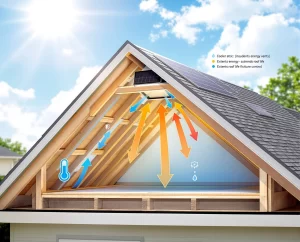
Good roof ventilation helps reduce moisture buildup, which can lead to mold growth and structural damage. I need to ensure my roof has adequate vents to regulate airflow.
Installation of Drip Edge
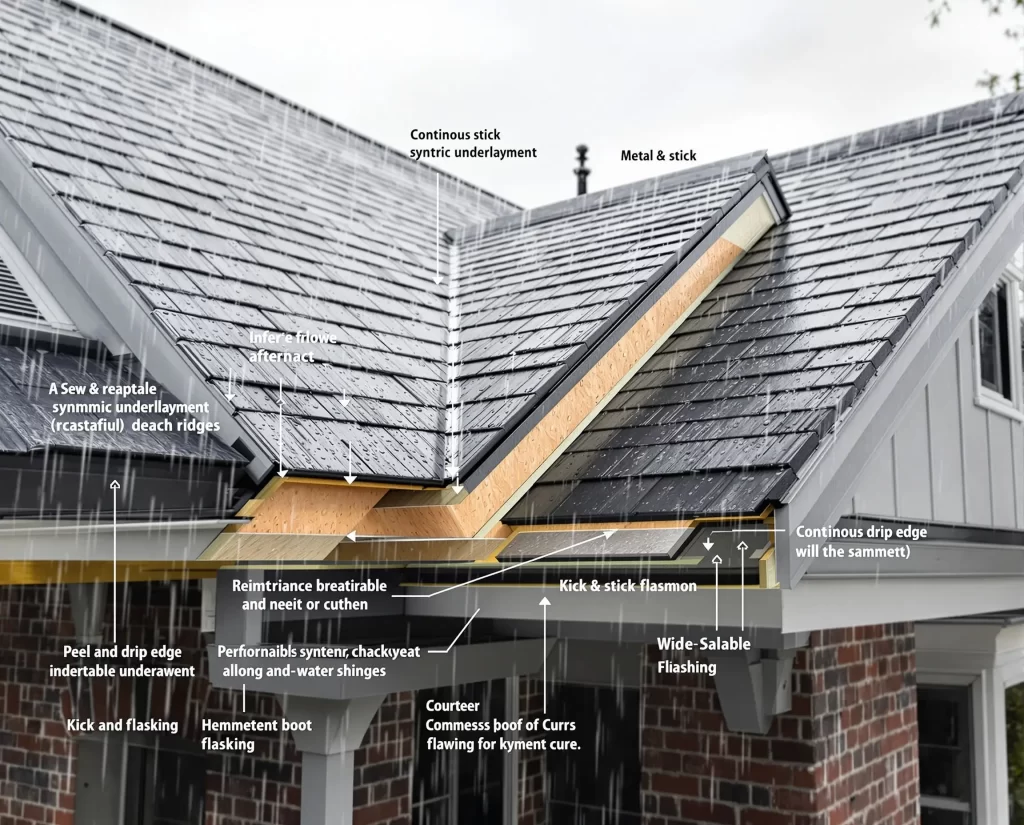
Incorporating a drip edge during installation offers additional protection. This aids in water drainage off the roof, preventing water from seeping under shingles.
Roof Flashing Techniques
I’ll pay special attention to flashing, which seals joints and prevents leaks in vulnerable areas like chimneys, valleys, and skylights.
- Ensure flashing is made of durable materials like flashing tape or metal.
Wind-Resistant Design Features
Living in a windy area means considering wind resistance. Features like locking mechanisms on shingles can provide added durability.
Regular Maintenance and Inspections
I commit to regular roof inspections to catch any signs of wear before they become serious issues. Simple measures like clearing debris can drastically reduce water damage risks.
DIY vs. Professional Services
While I could attempt some of these tasks myself, hiring professionals can guarantee quality and peace of mind. A trained contractor will know how to assess my roof properly and ensure all details are addressed.
Testimonials
“I was amazed at how much better my roof performs since the professionals redesigned it for water resistance. It’s been leak-free through heavy storms!” — Sarah L., Salem, OR
“The team provided exceptional service. My roof not only looks great but I can feel confident that it will withstand whatever Mother Nature throws at it.” — John R., Salem, OR
“I never realized how crucial it was to have a water-resistant roof until I saw the difference after the upgrade. Highly recommend their services!” — Lily M., Salem, OR
Did You Know?
Did you know that a well-maintained roof can prevent up to 93% of water-related damage to your home? Investing in proper roofing practices pays off!
TL;DR Summary
- Choose durable roofing materials that manage water effectively.
- Regularly maintain gutters and ensure proper roof slope.
- Hiring professionals can enhance roof quality and longevity.
- Apply water-resistant coatings for extra protection.
- Invest in ventilation and flashing for moisture control.
FAQs
How often should I inspect my roof for water damage?
I recommend inspecting my roof at least twice a year, ideally in spring and fall. This regular check-up can help catch potential issues early and prevent costly repairs.
Can I install a water-resistant roof myself?
While it’s possible, I may lack the experience needed for a proper installation. Hiring professionals ensures that my roof is correctly designed to be water damage-resistant.
What signs of water damage should I look for on my roof?
I should keep an eye out for missing shingles, dark spots, or sagging areas on my roof. These are telltale signs that water may be causing damage beneath the surface.
Are there guaranteed services for new roofs?
Many roofing companies offer warranties and guarantees for their work. I can inquire about different options to ensure I'm covered in case of defects.
How can I enhance drainage on a flat roof?
Implementing a proper drainage system, such as scuppers or internal drains, can help manage water effectively. A professional can assist with planning the best drainage solutions for my flat roof.