




















INTRO
Welcome! If you're looking to turn your yard waste into valuable compost, you’re in the right place. Composting not only reduces landfill waste but also enriches my garden, making it thrive. In this guide, I'll share tips and tricks I've learned about composting yard waste effectively at home. Let’s get started on this rewarding journey together!
Understanding What Yard Waste Is
Yard waste is the organic material that I collect when maintaining my garden or lawn. This waste typically includes grass clippings, leaves, branches, flowers, and shrubs. Knowing what can be composted helps me make the best use of my yard waste.
Types of Yard Waste I Can Compost
There are several types of yard waste I can compost, including:
- Grass clippings
- Fallen leaves
- Garden trimmings
- Small branches
- Plant matter
What to Avoid Composting
Not all yard waste is suitable for composting. I make sure to avoid:
- Diseased plants
- Weeds with seeds
- Meat or dairy products
- Pet waste
- Treated wood
Benefits of Composting at Home
Composting at home provides various benefits that enhance my gardening experience. It helps me:
- Reduce waste contribution to landfills
- Produce nutrient-rich compost
- Save on fertilizers
How Composting Works
Composting is a natural process where microorganisms break down organic matter. It involves the following stages:
- Decomposition
- Aeration
- Maturation
The Perfect Compost Recipe
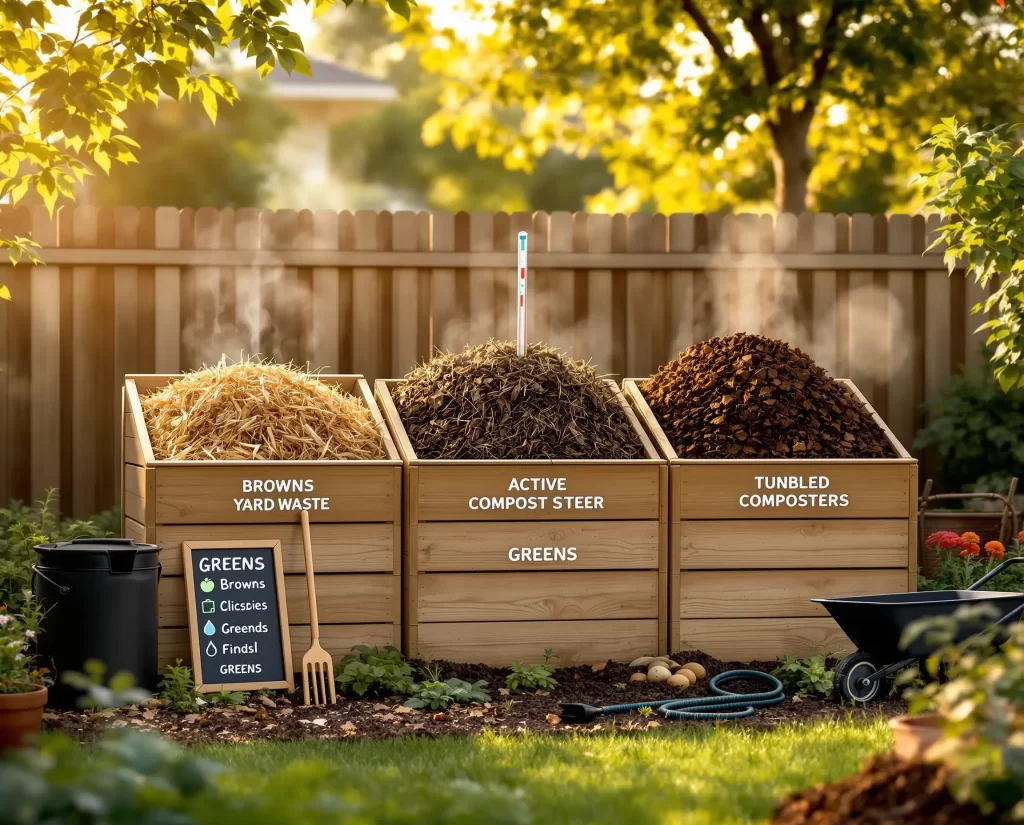
For optimal composting, I aim for the right balance of carbon-rich and nitrogen-rich materials. The ideal ratio is 30:1, carbon to nitrogen. Here’s how I do it:
- Carbon sources: Dry leaves, paper, and straw
- Nitrogen sources: Grass clippings, food scraps, and coffee grounds
Choosing the Right Compost Bin
Selecting the right compost bin is crucial for my composting success. I consider factors such as:
- Size: A larger bin can handle more waste.
- Material: Plastic bins retain heat; wooden bins are more attractive.
How to Set Up My Compost Bin
Setting up my compost bin is simple! Here’s how I do it:
- Choose a location—away from direct sunlight but still accessible.
- Layer materials, starting with coarse debris for aeration.
- Regularly turn the pile to incorporate oxygen.
Maintaining My Compost
A well-maintained compost pile is key to speeding up the decomposition process. I follow these maintenance tips:
- Turn the pile every few weeks
- Monitor moisture—aim for a damp sponge-like consistency
- Keep an eye on the temperature—ideally between 120°F and 160°F
When Is My Compost Ready to Use?
I know my compost is ready when it’s dark, crumbly, and has a pleasant earthy smell. This process can take anywhere from two months to two years!
DIY vs. Professional Services
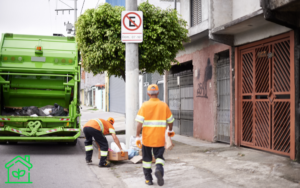
While composting is a fulfilling DIY task, hiring professionals for yard waste removal can save me time and effort when I have large amounts to dispose of. Professionals ensure safe and eco-friendly disposal.
Testimonials
“I never knew composting could be so easy! The tips helped me transform my yard waste into great compost in no time.” — Sarah T., Chesapeake, VA
“These tricks saved me so much time in my busy schedule. My garden is thriving thanks to my homemade compost!” — James L., Chesapeake, VA
“I love how my yard waste becomes a nutrient source for my plants. It feels good to do my part for the environment!” — Alice K., Chesapeake, VA
Did You Know?
Did you know that composting can reduce household waste by up to 30%? By composting my yard waste, I'm contributing significantly to waste reduction and enriching my garden soil!
TL;DR Summary
- Composting yard waste enriches my garden and reduces landfill waste.
- I should compost grass clippings, leaves, and garden trimmings while avoiding diseased plants and meat products.
- A balanced compost recipe and proper maintenance accelerate the composting process.
- Professionals can assist with larger yard waste removal to simplify the process.
FAQs
1. How long does it take for my compost to be ready?
Typically, my compost can take anywhere from two months to two years, depending on the materials used and the maintenance provided. Keeping it aerated and monitoring moisture levels speeds up the process.
2. Can I compost kitchen scraps along with yard waste?
Absolutely! Kitchen scraps like fruit and vegetable peels can be composted with yard waste. However, I avoid adding meat or dairy to prevent odor and pests.
3. What if my compost pile smells bad?
A foul smell can indicate that my compost pile is too wet or lacks oxygen. To fix this, I turn the pile to aerate it and add dry materials like leaves or straw to absorb excess moisture.
4. Is there any cost associated with composting at home?
Composting at home is generally low-cost or free. The main investment may be in purchasing a compost bin if I choose to use one, but I can also build a simple one myself.
5. How can professional services help with my composting efforts?
If I have large amounts of yard waste, professional services can assist in removing it efficiently. They ensure that materials are disposed of responsibly and may even provide guidance on composting best practices.